Ever sent a laugh and wondered why the tears came out blue?
Your friend sends a meme, you reply with a laughing face, and then you notice the tears are bright blue. Or maybe you saw a blue heart tucked next to a 😂 and wondered if it was a code.
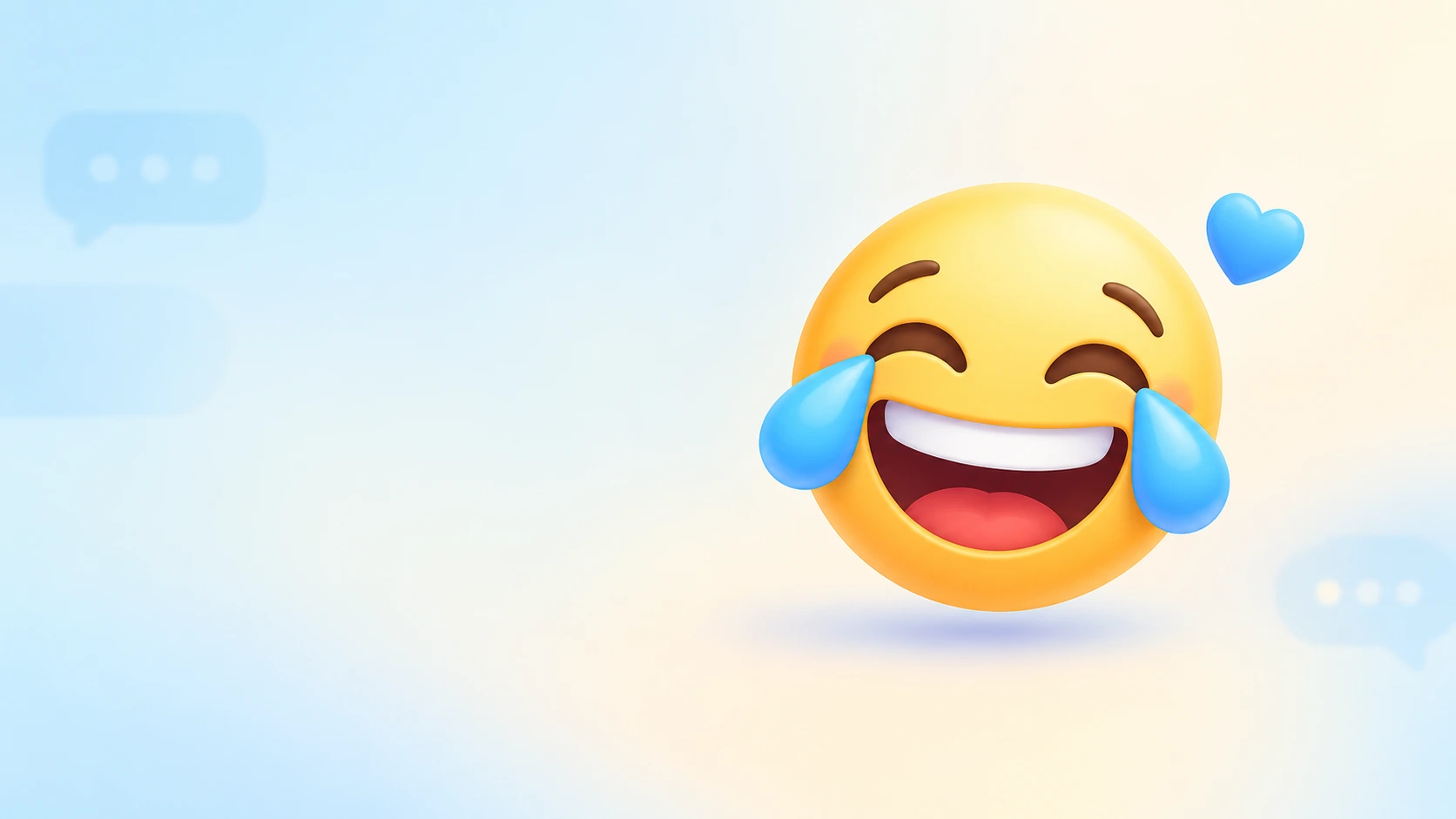
That’s why so many people search for the laughing emoji blue. There isn’t one official blue laughing face, so people usually mean a laughing face with blue tears, or a laugh paired with a blue heart. Let’s sort out what each version says and how to use it.
“The tears may change color, but the laugh still lands.”
What does the laughing emoji blue mean?
The laughing emoji blue usually means a laughing face with blue tears, most often 😂 or 🤣, sometimes paired with a blue heart 💙. The laughing face says something is very funny. The blue heart adds warmth, loyalty, or calm affection. Together they mean you are laughing with someone you care about. Context always shapes the tone.
The blue part comes from how platforms draw the tears. On many phones, 😂 and 🤣 show blue tears, so people call them blue laughing emojis. The color does not change the laugh. It just makes the tears easy to spot.
😭 causes the biggest mix up. Its tears are blue too, and friends often use it for jokes that are too funny to handle. In a sad chat, though, it means exactly what it looks like.
🥶 is a blue face, but it points to cold or awkward moments, not laughter. Next to a laugh, it often hints that a joke fell flat.
💙 and 🩵 bring the color in heart form. Besides 😂, they usually say, “You make me laugh, and I like you.” How warm that feels depends on who sends it.
Meanings shift with context, so read the whole chat, not just the emoji. A laugh from a close friend and a laugh from a coworker can land very differently.
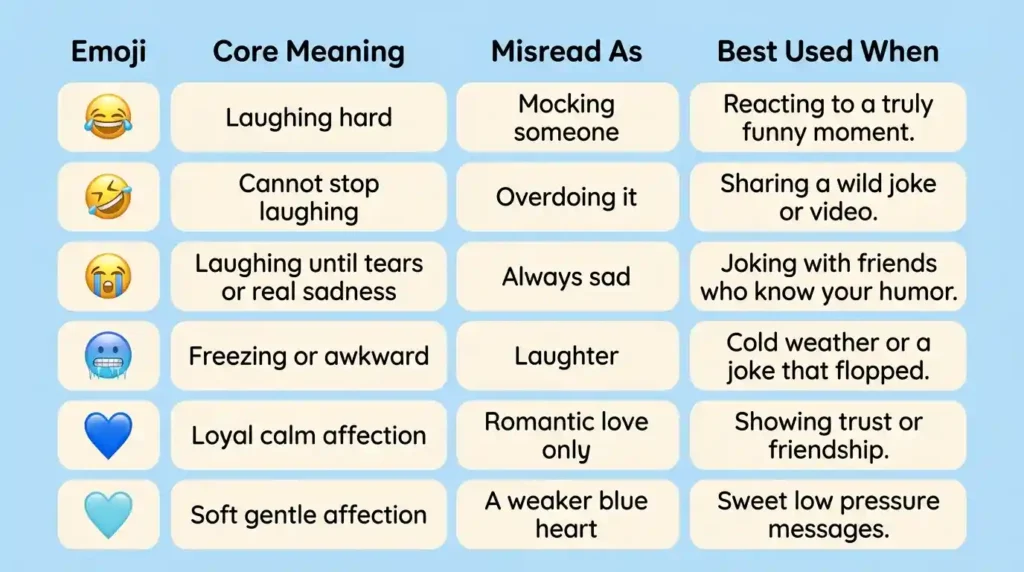
| Emoji | Core meaning | Misread as | Best used when |
| 😂 | Laughing hard | Mocking someone | Reacting to a truly funny moment |
| 🤣 | Cannot stop laughing | Overdoing it | Sharing a wild joke or video with friends |
| 😭 | Laughing until tears, or real sadness | Always sad | Joking with friends who know your humor |
| 🥶 | Freezing or awkward | Laughter | Talking about cold weather or a joke that flopped |
| 💙 | Loyal, calm affection | Romantic love only | Showing trust or friendship |
| 🩵 | Soft, gentle affection | A weaker 💙 | Sending sweet, low pressure messages |
More Meanings
😂 Face with Tears of Joy
Meaning: Big, genuine laughter at something really funny.
Example 1: That meme is my whole personality 😂
Example 2: Stop, my sides hurt 😂
🤣 Rolling on the Floor Laughing
Meaning: Laughter so strong you can’t hold it together.
Example 1: I can’t breathe 🤣
Example 2: Send that video again 🤣
😆 Grinning Squinting Face
Meaning: Excited, playful laughter with a big smile.
Example 1: Okay, that joke got me 😆
Example 2: We are so bad at this game 😆
😄 Grinning Face with Smiling Eyes
Meaning: Happy, warm amusement without going over the top.
Example 1: Good morning, you goofball 😄
Example 2: That made my day 😄
😅 Grinning Face with Sweat
Meaning: Nervous laughter or relief after an awkward moment.
Example 1: I forgot my keys again 😅
Example 2: Well, that was close 😅
😹 Cat with Tears of Joy
Meaning: Silly, lighthearted laughter with a playful cat twist.
Example 1: Your dog video is too much 😹
Example 2: Why is this so accurate 😹
😭 Loudly Crying Face
Meaning: Real sadness, or laughing so hard you’re “crying.”
Example 1: I can’t stop laughing at this 😭
Example 2: I miss you so much 😭
💙 Blue Heart
Meaning: Loyalty, trust, calm affection, and friendship.
Example 1: Thanks for always having my back 💙
Example 2: Missing you today 💙
🩵 Light Blue Heart
Meaning: A softer, gentler affection that feels sweet and easygoing.
Example 1: You always make me smile 🩵
Example 2: Sending you a little love 🩵
🥶 Cold Face
Meaning: Feeling freezing, or shivering at something awkward.
Example 1: It is so cold outside 🥶
Example 2: That joke fell flat 🥶
How to use the laughing emoji blue the right way
Where you send an emoji matters as much as which one you pick. Here is how each app tends to work.
WhatsApp emojis shine in personal chats. Reply to a funny voice note with 😂, or send 💙 to a friend who had a rough day. Family groups usually welcome more emojis, while work chats do better with one or two. If the mood is emotional or casual, a laugh plus a heart feels natural.
Instagram emojis work well in captions and comments. A 😂 under a friend’s post says “this is you,” and a 🩵 under a cozy photo keeps the mood soft. Keep captions light, since a long row of laughing faces can look messy. One or two emojis usually read better.
TikTok
TikTok comments run on humor and irony. Many people use 😭 to say “this is too funny,” and 🤣 works for quick reactions. Because the tone is playful, an emoji often means something different from its face value. Watch how others comment before you copy the style.
You may notice your 😂 looks different from your friend’s. Emojis follow Unicode, a shared standard that gives each one a code. Apple, Google, Samsung, and others then draw their own version, so the tears may look bluer on one phone than another.
Dos
- Use the emoji when it matches the emotional tone.
- Consider your relationship with the person.
- Use combinations that feel natural.
Don’ts
- Do not overload serious messages with emojis.
- Do not assume everyone interprets an emoji the same way.
- Do not use an emoji combination that changes the intended tone.
Best laughing emoji blue combos: copy & paste
Tap, copy, and paste any of these into your chat. Romantic emojis like 💙 and 🩵 pair best with a light laugh.
Romantic
👉 💙🩵 A soft, sincere message to a partner
😂💙 Telling someone they make you laugh and you love it
👉 🩵😄 A sweet good morning text to someone special
Cute
👉 😹🩵 A silly reply to a friend’s pet photo
😆💙 When something is both adorable and funny
👉 😅🩵 After a small, harmless mistake
Flirty
👉 😅💙 Answering a shy or flirty message
😂🥶 Teasing someone about a pickup line that froze the room
👉 🤣😭 Playful teasing when their joke has you gone
Missing someone
👉 😭💙 Laughing about old memories with a friend you miss
🥶🩵 A cold night when you wish they were nearby
👉 😭🩵 Tearful but grateful to have them in your life
Good night
👉 😂🩵 One last laugh before bed
😄💙 A warm, easy goodnight to a close friend
👉 🤣💙 Ending a funny late night chat on a kind note
Trending laughing emoji blue in 2026
If you follow trending emojis in 2026, a few from this set keep showing up. These are general patterns, not hard numbers.
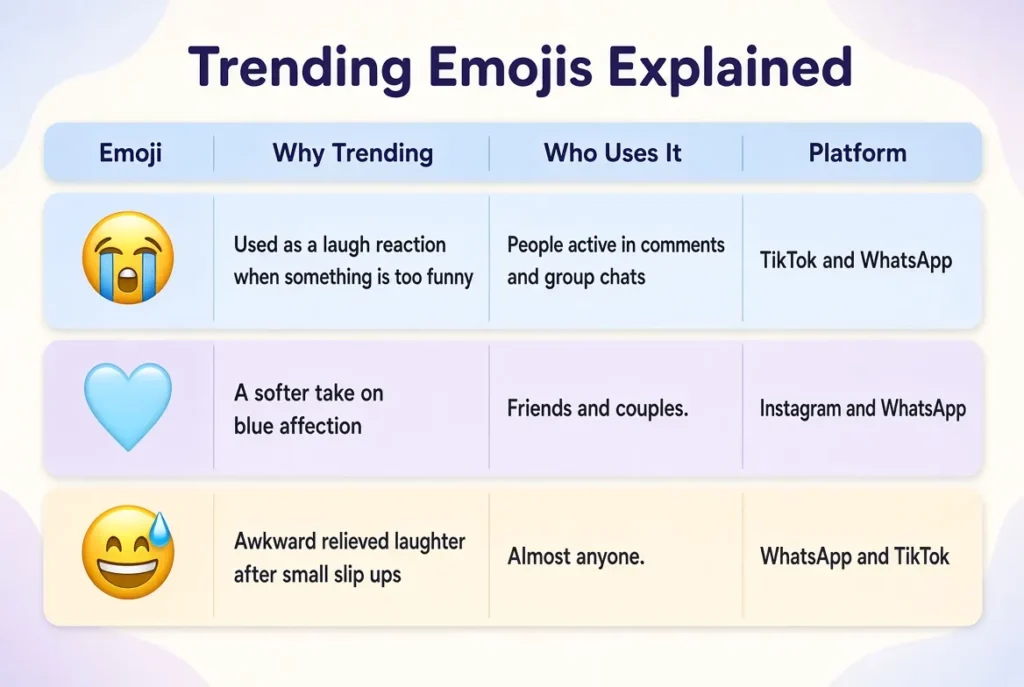
😭 appears as a laugh reaction whenever something is too funny to handle. People who spend time in comment sections and group chats use it most, especially on TikTok and WhatsApp. It fits a modern habit of saying the opposite of what a face shows.
🩵 has become a gentle alternative to 💙. Friends and couples use it in Instagram comments and captions when they want a soft, easygoing tone.
😅 covers awkward laughs. People send it on WhatsApp and TikTok after a small slip up or a shy reply, and it fits how casual online talk often laughs at itself.
| Emoji | Why trending | Who uses it | Platform |
| 😭 | Used as a laugh reaction when something is too funny | People active in comments and group chats | TikTok, WhatsApp |
| 🩵 | A softer take on blue affection | Friends and couples | Instagram, WhatsApp |
| 😅 | Awkward, relieved laughter after small slip ups | Almost anyone | WhatsApp, TikTok |
Emoji communication keeps changing as people find new ways to say familiar feelings.
FAQ
What is the most popular laughing emoji blue?
Many people treat 😂 as they go to laugh, and it’s the one most linked with blue tears. 🤣 covers bigger laughs. What’s popular varies by app, region, and friend group.
What does 💙 mean from a girl or boy?
Gender matters less than context. Look at your relationship, the conversation, and how the person usually texts. A 💙 from a close friend, a partner, or a classmate can each mean something different.
Why do emojis look different on iPhone vs Android?
Emojis follow Unicode standards, which set the character and its basic meaning. Each platform, like Apple or Google, then draws its own design. So the same 😂 can look different on iPhone and Android.
Are laughing emoji blue used differently in other countries?
Yes, they can be. Culture, language, and local online habits shape how people read emojis. When chatting across countries, keep the tone clear and add a few words if needed.
Conclusion
Blue tears or a blue heart, the goal is the same: sound like yourself. Match the emoji to the mood, keep the combo simple, and notice how the other person usually texts. A little care goes a long way in digital chats.

About Matiullah Mughal
Matiullah Mughal is a writer and digital content creator at AuthorityNoria, a platform dedicated to helping people understand emoji meanings, symbols, expressions, and modern digital communication.
With a passion for clear and useful online content, Matiullah Mughal researches the meanings, uses, and cultural context behind emojis and symbols to make digital communication easier to understand. His goal is to turn confusing or unfamiliar emojis into simple, practical explanations that readers can quickly understand and use.
At AuthorityNoria, Matiullah Mughal focuses on creating helpful, easy-to-read guides covering emoji meanings, emoji combinations, symbols, texting expressions, social media communication, and digital language.
Through his work, he aims to help readers choose the right emoji, understand what others mean, and communicate their feelings more clearly in everyday conversations.
When he’s not writing, Matiullah Mughal enjoys exploring new digital trends, online communication, and the constantly changing language of the internet.