Thanks. Now you need the perfect reply.
Someone sends you a long thank you message after you helped with their project. You want to reply fast, but typing “you’re welcome” feels stiff. So you open your emoji keyboard and freeze. Which one sounds warm, and which one sounds cold? That is exactly why people search for your welcome emoji. They want a quick reply that feels kind and natural. This guide shows what each option means, how people use them, and which ones you can copy and paste right now.
“A tiny emoji can make a simple reply feel like a real smile.”
What do your welcome emoji mean?
Your welcome emojis are small symbols that answer a thank you with warmth. Most people use 😊 for a friendly reply, 🙏 for humble respect, and 🤗 for a hug like tone. Others pick 👍 for a quick “no problem.” The exact meaning shifts with your relationship, the platform, and the tone of the chat.
These emoji meanings change quickly with context, so here are the six people reach for most.
😊 is the safe default. It works with friends, coworkers, and family, and it reads as polite and calm with strangers.
🙏 can mean “gladly” or “with respect.” In some chats it looks like a thank you of its own, so context matters a lot.
🤗 adds a hug. It suits close friends and family, but it can feel too warm for a work chat.
👍 is quick and casual. Some people read it as friendly, and others read it as short or distant.
😉 adds a playful edge. With a friend it says “anytime.” With a crush, it can feel flirty.
🫶 is gentle and caring. It fits close relationships and supportive messages.
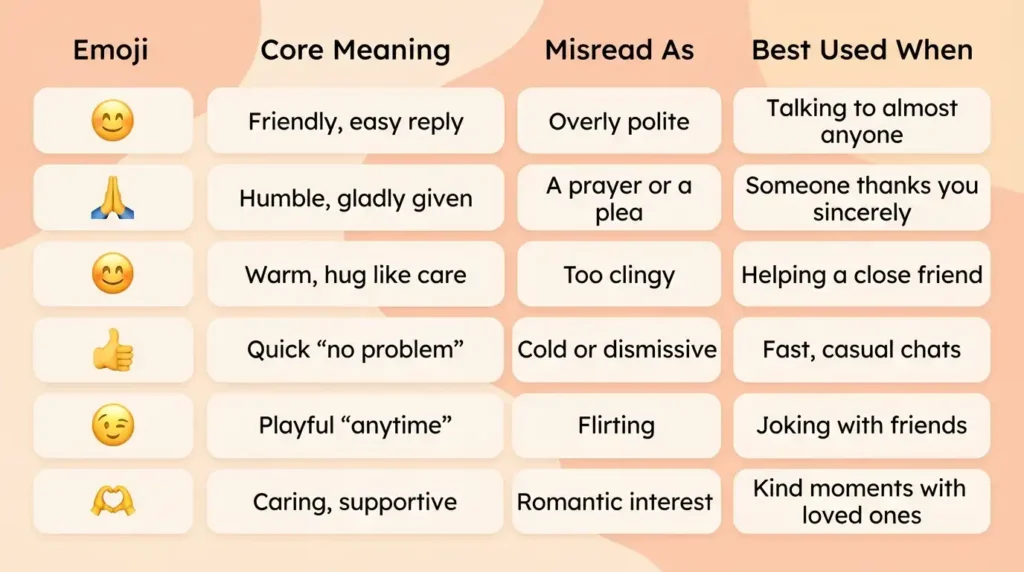
Table
| Emoji | Core meaning | Misread as | Best used when |
| 😊 | Friendly, easy reply | Overly polite | Talking to almost anyone |
| 🙏 | Humble, gladly given | A prayer or a plea | Someone thanks you sincerely |
| 🤗 | Warm, hug like care | Too clingy | Helping a close friend |
| 👍 | Quick “no problem” | Cold or dismissive | Fast, casual chats |
| 😉 | Playful “anytime” | Flirting | Joking with friends |
| 🫶 | Caring, supportive | Romantic interest | Kind moments with loved ones |
More Meanings
😊 Smiling Face with Smiling Eyes
Meaning: A gentle, friendly smile that shows you are happy to help.
Example 1: Happy to help 😊
Example 2: Anytime, just ask 😊
🙏 Folded Hands
Meaning: Gratitude and humble respect returned to the sender.
Example 1: Glad it worked out 🙏
Example 2: Of course, take care 🙏
🤗 Hugging Face
Meaning: Open armed warmth and comfort.
Example 1: Anytime, you know I’ve got you 🤗
Example 2: Come here, no thanks needed 🤗
👍 Thumbs Up
Meaning: Simple approval that says no problem.
Example 1: Sure thing 👍
Example 2: All good, no worries 👍
😉 Winking Face
Meaning: A playful, knowing hint of friendliness.
Example 1: Anytime, you owe me lunch 😉
Example 2: Told you it would work 😉
🫶 Heart Hands
Meaning: Affection and care offered with kindness.
Example 1: You deserve the help 🫶
Example 2: Always here for you 🫶
❤️ Red Heart
Meaning: Deep love, affection, and emotional connection.
Example 1: Anything for you ❤️
Example 2: You are so welcome ❤️
😌 Relieved Face
Meaning: Calm contentment and quiet satisfaction.
Example 1: Glad it all worked out 😌
Example 2: Happy to make it easier 😌
🤝 Handshake
Meaning: Mutual respect and a fair, friendly agreement.
Example 1: Pleasure working with you 🤝
Example 2: Deal done, all good 🤝
✨ Sparkles
Meaning: A light touch of cheer and positivity.
Example 1: Anytime, have a great day ✨
Example 2: Glad I could help ✨
How to use your welcome emoji the right way
WhatsApp emojis work best in personal chats. A 😊 or 🫶 after a friend’s thank you feels natural.
In group chats, a quick 👍 keeps the thread easy to follow.
Instagram emojis show up in captions, comments, and story replies. A ✨ or 😊 under a thank you comment keeps the tone light.
Pair one emoji with a few words so the reply feels personal.
TikTok
TikTok replies are fast and playful. A 😉 or 🤝 in the comments fits the joking mood.
Keep it short, because people scroll quickly.
Dos
- Match the emoji to the mood of the chat.
- Think about your relationship with the person.
- Pick combinations that feel natural to you.
Don’ts
- Don’t pile emojis onto a serious message.
- Don’t assume everyone reads an emoji the same way.
- Don’t use a combo that changes your tone by accident.
Best your welcome emoji combos: copy and paste
These copy paste emojis are ready for texting, captions, and comments. Romantic emojis go first.
Romantic
👉 ❤️🫶 A warm reply to a partner’s thank you note
❤️😊 A sweet answer after doing a small favor
👉 🫶✨ A loving reply with a little sparkle
Cute
👉 😊✨ A bright, friendly answer to a quick thanks
🤗😊 A soft, cuddly reply for a close friend
👉 😌✨ A calm, happy reply after a good outcome
Flirty
👉 😉❤️ A playful reply when someone thanks you sweetly
😉✨ A teasing “anytime” for a crush
👉 😉🫶 A flirty but gentle answer in a close chat
Missing someone
👉 🤗❤️ When you want them close after they say thanks
🫶🤗 A caring reply to someone far away
👉 😌❤️ A quiet, fond reply that says you’re always there
Good night
👉 😌🙏 A peaceful reply at the end of the day
🙏✨ A soft sign off after a late thank you
👉 🫶😌 A cozy reply before bed
Trending your welcome emoji in 2026
These are general patterns from how people write online, not hard numbers.
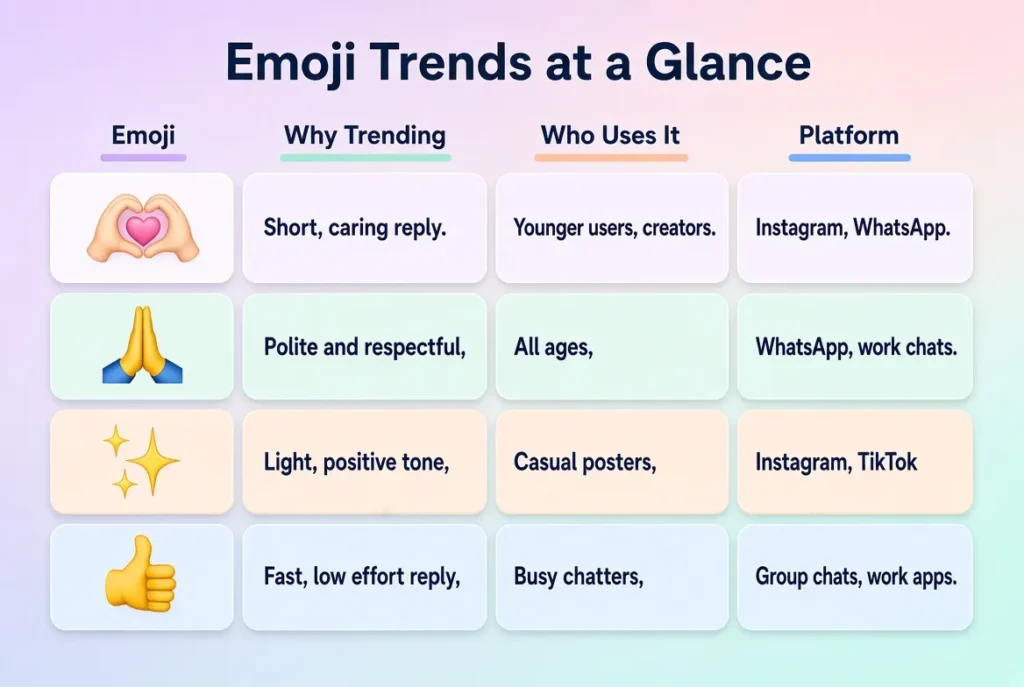
🫶 shows up often in supportive replies. Younger users and creators use it a lot, mostly in Instagram comments and WhatsApp chats. It fits the short, caring style of modern texting.
🙏 stays common in polite conversations across many regions. People of all ages use it on WhatsApp and in work chats. It gives a thank you reply a calm, respectful feel.
✨ adds a light, positive touch. It appears in captions and comments on Instagram and TikTok. It suits the soft, upbeat tone many people like right now.
👍 remains a go to for quick answers in group chats and at work. Some readers find it flat, so pairing it with words can help.
| Emoji | Why trending | Who uses it | Platform |
| 🫶 | Short, caring reply | Younger users, creators | Instagram, WhatsApp |
| 🙏 | Polite and respectful | All ages | WhatsApp, work chats |
| ✨ | Light, positive tone | Casual posters | Instagram, TikTok |
| 👍 | Fast, low effort reply | Busy chatters | Group chats, work apps |
Emoji language keeps shifting as people find new ways to sound warm online.
FAQ
What is the most popular welcome emoji?
😊 is a common pick for a friendly reply, and 🙏 and 👍 are everyday choices too. No single emoji fits every chat, so choose the one that matches your tone.
What does 😉 mean from a girl or boy?
Gender does not decide the meaning. It depends on the relationship, the conversation, and the tone. A friend may use it as a joke, while a crush may use it to flirt.
Why do emojis look different on iPhone vs Android?
Apple, Google, Samsung, and other platforms each draw their own versions of every emoji. They all follow Unicode, the shared standard that gives each emoji a code. So the same 😊 can look slightly different on each phone.
Are your welcome emoji used differently in other countries?
Yes, they can be. Culture, language, and community all shape how an emoji feels. A gesture that seems warm in one place may seem casual or formal in another.
Conclusion
The best reply is the one that sounds like you. Pick an emoji that fits the person and the moment, and keep your message short. Save your favorite combos so a warm answer is always one tap away.

About Matiullah Mughal
Matiullah Mughal is a writer and digital content creator at AuthorityNoria, a platform dedicated to helping people understand emoji meanings, symbols, expressions, and modern digital communication.
With a passion for clear and useful online content, Matiullah Mughal researches the meanings, uses, and cultural context behind emojis and symbols to make digital communication easier to understand. His goal is to turn confusing or unfamiliar emojis into simple, practical explanations that readers can quickly understand and use.
At AuthorityNoria, Matiullah Mughal focuses on creating helpful, easy-to-read guides covering emoji meanings, emoji combinations, symbols, texting expressions, social media communication, and digital language.
Through his work, he aims to help readers choose the right emoji, understand what others mean, and communicate their feelings more clearly in everyday conversations.
When he’s not writing, Matiullah Mughal enjoys exploring new digital trends, online communication, and the constantly changing language of the internet.