One tiny face can mean flu, food poisoning, or a really bad taste.
Your friend texts, “Feeling rough today 🤢,” and you pause. Is she actually ill, or just done with Monday? That small moment is why people search for the sick face emoji. These faces look simple, yet they cover everything from a real fever to a joke about a cringey video. Every app draws them a little differently, which adds to the confusion. This guide breaks down what each one means, how people really use them in chats and captions, and what you can copy and paste.
With sick emojis, the sentence around the face matters more than the face itself.
What do sick face emojis mean?
Sick face emojis show that someone feels unwell, grossed out, or fed up. The thermometer face usually means a fever or cold, the green face means nausea or disgust, and the mask face means illness or caution. Meaning shifts with tone, so a joke or a complaint can use the same face.
Here are the five faces you will see most often.
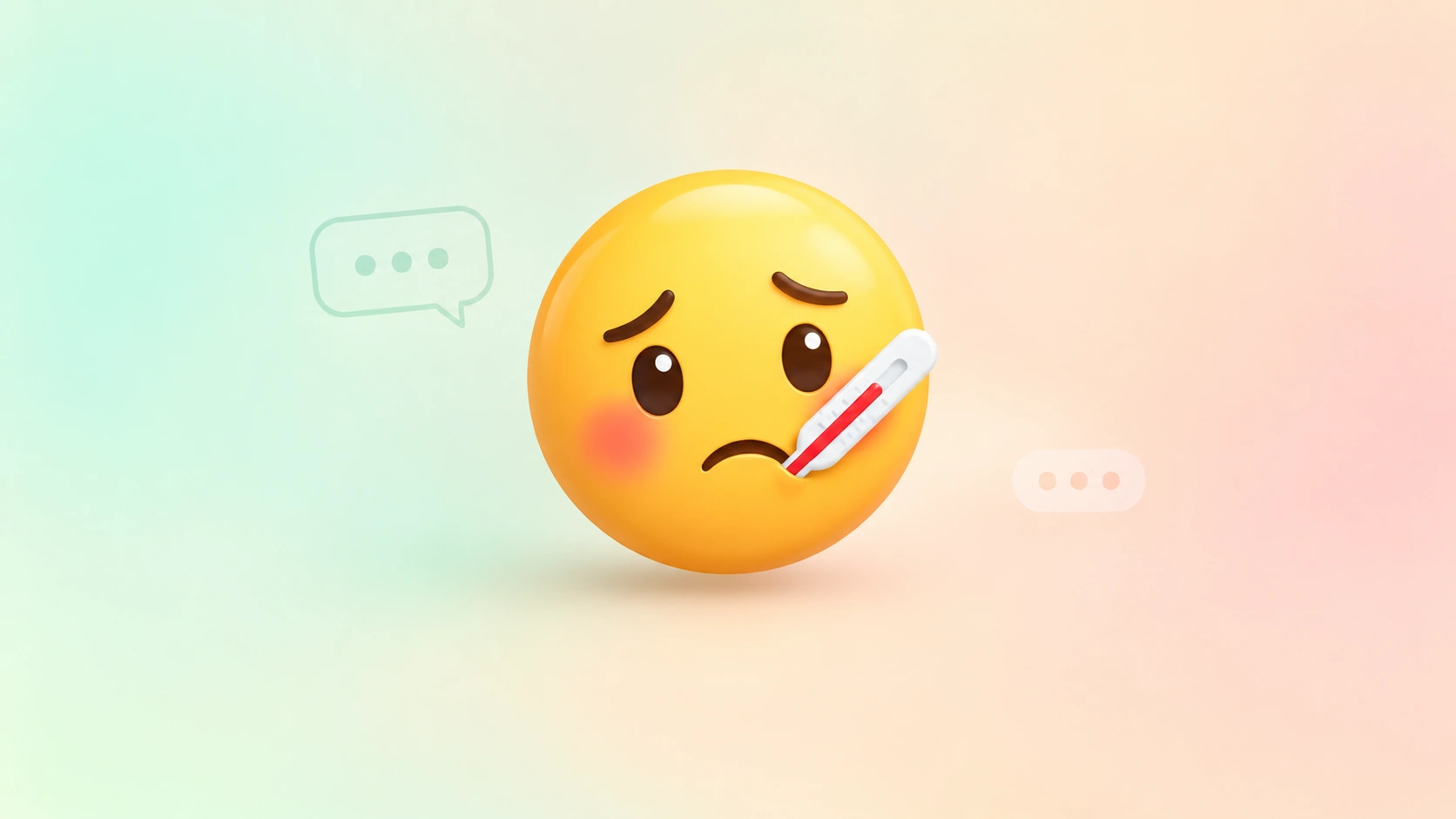
🤒 is the classic “I’m ill” face. Most people use it for a fever, a cold, or a sick day. Some use it as a joke about being sick of something, so tone matters.
🤢 shows nausea or disgust. It fits a stomach bug, but it also fits a gross photo or an awkward comment. In many chats it works as a reaction, not a health update.
🤮 is the louder version. People use it for real vomiting, or to say something is truly revolting. A sweet couple post can get it too, usually as a joke.
😷 points to illness, but it also signals caution. It can mean “I’m sick, keep your distance” or simply “I’m masked up.” The rest of the message settles it.
🤧 means sneezing, colds, or allergies. It feels lighter than the others and often sounds cute. It rarely suggests anything serious.
| Emoji | Core meaning | Misread as | Best used when |
| 🤒 | Fever or feeling unwell | Faking a sick day | Telling someone you’re under the weather |
| 🤢 | Nausea or disgust | A stomach illness | Reacting to something gross |
| 🤮 | Strong disgust or vomiting | Pure drama | Stressing how bad something is |
| 😷 | Illness or caution | Coldness or rudeness | Explaining you’re keeping your distance |
| 🤧 | Cold, sneezing, allergies | Serious illness | Making casual cold complaints |

More Meanings
🤒 Face with Thermometer
Meaning: Fever, a cold, or feeling unwell.
Example 1: Staying home today 🤒
Example 2: Caught the flu again 🤒
🤢 Nauseated Face
Meaning: Feeling queasy or grossed out.
Example 1: That smell is awful 🤢
Example 2: I ate way too much cake 🤢
🤮 Face Vomiting
Meaning: Throwing up or extreme disgust.
Example 1: Food poisoning is the worst 🤮
Example 2: That plot twist was gross 🤮
😷 Face with Medical Mask
Meaning: Being sick, staying careful, or wearing a mask.
Example 1: Sniffles all week, so I’m masked up 😷
Example 2: Heading to the clinic 😷
🤧 Sneezing Face
Meaning: Sneezing from a cold or allergies.
Example 1: Pollen season has hit me 🤧
Example 2: Cannot stop sneezing 🤧
🤕 Face with Head Bandage
Meaning: Hurt, injured, or a bad headache.
Example 1: Banged my head on the door 🤕
Example 2: This headache will not quit 🤕
🥴 Woozy Face
Meaning: Dizzy, foggy, or a little off.
Example 1: Stood up too fast 🥴
Example 2: This medicine has me so sleepy 🥴
🥵 Hot Face
Meaning: Overheated, feverish, or too warm.
Example 1: This fever is burning me up 🥵
Example 2: It is so hot in this room 🥵
🥶 Cold Face
Meaning: Freezing or shivering with chills.
Example 1: Chills all night 🥶
Example 2: Why is the AC so cold 🥶
😵💫 Face with Spiral Eyes
Meaning: Dizzy, spinning, or overwhelmed.
Example 1: The room is spinning 😵💫
Example 2: Too much work this week 😵💫
How to use sick face emoji the right way
Emoji come from Unicode, a shared standard that gives each icon its own code. Every platform then draws its own version, so your 🤒 may look a bit different on a friend’s phone.
Use your emoji keyboard, or copy paste emojis from this page, when you want a quick reply.
WhatsApp emojis lean personal. People send them to family and close friends to share how they feel, check in, or ask for sympathy. A message like “Fever since last night 🤒” often gets a call or a “get well soon” back. They show up in status updates too.
Instagram emojis live in captions, stories, and comments. A sick day selfie with 😷 reads as a slow, cozy mood. Under a funny post, 🤢 usually means “too cringe,” said playfully.
TikTok
On TikTok, sick faces are mostly about humor. Comments use 🤮 for dramatic disgust and 🥴 for chaotic energy. People also pair 😵💫 with videos about being tired or overloaded.
Dos
- Use the emoji when it matches the emotional tone.
- Consider your relationship with the person.
- Use combinations that feel natural.
Don’ts
- Do not overload serious messages with emojis.
- Do not assume everyone interprets an emoji the same way.
- Do not use an emoji combination that changes the intended tone.
Best sick face emoji combos copy & paste
Here are 15 combos you can copy and send as they are. Romantic emojis do not always mean hearts, and a soft pairing with 🤍 can turn a sick message into a caring one.
Romantic
👉 🤒🤍 Sending care to a partner who is under the weather
🤕🤍 “Hope your head feels better, love you”
👉 😷🤍 Wishing someone safe and healthy
Cute
👉 🤧💊 A soft cold season complaint
🥴🤍 Feeling lightheaded over a crush
👉 🤒💊 “Taking my medicine like a good kid”
Flirty
👉 🥵🤒 Teasing “you’re making me feverish”
😵💫🤍 Dizzy from a sweet message
👉 🥴🥵 “You’ve got me flustered”
Missing someone
👉 🤒🥶 Sick and shivering, wishing you were here
🤧🤍 Stuffy nose, missing you
👉 🥶🤍 Cold without you around
Good night
👉 🤕💊 Headache tablet taken, going to sleep
😷💊 Mask off, medicine taken, off to bed
👉 🤧😷 Sniffling and resting, good night
Trending sick face emoji in 2026
When people talk about trending emojis 2026, the sick family keeps showing up in jokes and status updates. These are general usage patterns, not measured data.
🤢 is a common reaction in TikTok and Instagram comments. People use it when something feels cringey, oversharing, or just a bit much. It suits fast, joking replies where a full sentence would feel heavy.
🥴 fits the chaotic, slightly lost mood that many online jokes play with. Group chats and TikTok captions are where it often lands. It works because it feels playful instead of medical.
😵💫 matches the overwhelmed feeling of a packed week. People use it when venting about work, school, or a long to do list. It sounds more relatable than a long complaint.
😷 shows up in cold season posts and quick status updates. People use it to say they are resting or keeping their distance. WhatsApp chats and Instagram stories are common places to spot it.
| Emoji | Why trending | Who uses it | Platform |
| 🤢 | Quick reaction to cringe or oversharing | Friends joking in comments | TikTok, Instagram |
| 🥴 | Matches chaotic, silly moods | Group chat regulars | TikTok, WhatsApp |
| 😵💫 | Fits busy, overwhelmed weeks | People venting about workload | Instagram, WhatsApp |
| 😷 | Signals rest and caution | People sharing health updates | WhatsApp, Instagram |

Emoji communication tends to keep evolving as people give familiar icons new jobs.
FAQ
What is the most popular sick face emoji?
There is no verified ranking, but 🤒 and 🤢 are the ones many people reach for first. They match the plain idea of being ill or grossed out. Popularity also shifts by app and friend group.
What does 🤒 mean from a girl or boy?
It means the same either way: the person feels unwell, or they are joking about it. Context, relationship, and the rest of the conversation matter far more than gender. Read the whole message, not just the face.
Why do emojis look different on iPhone vs Android?
Unicode sets the standard that defines what each emoji is. Apple, Google, Samsung, and others then draw their own designs. The meaning stays the same even when the style changes.
Are sick face emojis used differently in other countries?
Yes, they can be. Culture and context shape how people read emojis. Where masks are a normal part of daily life, a mask emoji may read as simple caution.
Conclusion
Sick face emojis are small, but they carry real feeling when they match the moment. Pay attention to tone and to who you are texting. Copy what works, skip what feels forced, and let your own voice lead. That is how these faces end up sounding human.

About Matiullah Mughal
Matiullah Mughal is a writer and digital content creator at AuthorityNoria, a platform dedicated to helping people understand emoji meanings, symbols, expressions, and modern digital communication.
With a passion for clear and useful online content, Matiullah Mughal researches the meanings, uses, and cultural context behind emojis and symbols to make digital communication easier to understand. His goal is to turn confusing or unfamiliar emojis into simple, practical explanations that readers can quickly understand and use.
At AuthorityNoria, Matiullah Mughal focuses on creating helpful, easy-to-read guides covering emoji meanings, emoji combinations, symbols, texting expressions, social media communication, and digital language.
Through his work, he aims to help readers choose the right emoji, understand what others mean, and communicate their feelings more clearly in everyday conversations.
When he’s not writing, Matiullah Mughal enjoys exploring new digital trends, online communication, and the constantly changing language of the internet.