The tiny faces that run your timeline, decoded.
You’re scrolling your timeline and someone replies to a serious post with 💀. Another person answers a sad story with 😭 and a third sends 🥺 to a stranger. Nobody seems confused except you. That is why people search for emoji Twitter: the platform has its own habits, and the usual meanings do not always apply. A skull is not about death, and a crying face is often about laughing. This guide breaks down the emojis people actually use on Twitter, what they mean, and how to copy and use them without sending the wrong signal.
“One small emoji can change the whole tone of a post.”
What does emoji Twitter mean?
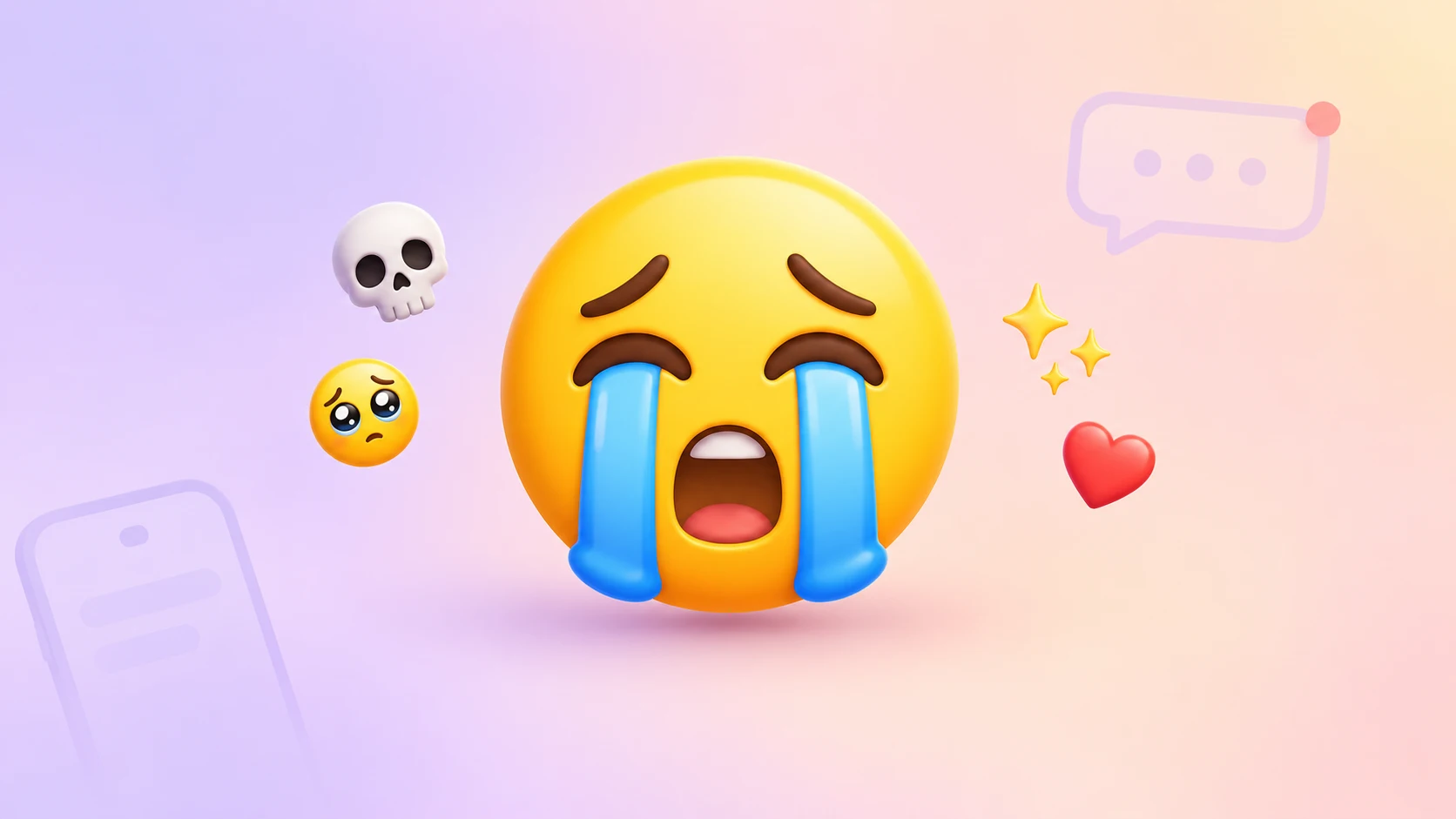
Emoji Twitter usually means the small set of emojis people use again and again on the platform, like 😭, 😂, 💀, and 🥺. Their meanings often shift with context. A crying face can mean laughter, a skull can mean this is so funny I’m dead, and a heart can be sincere or playful depending on the reply.
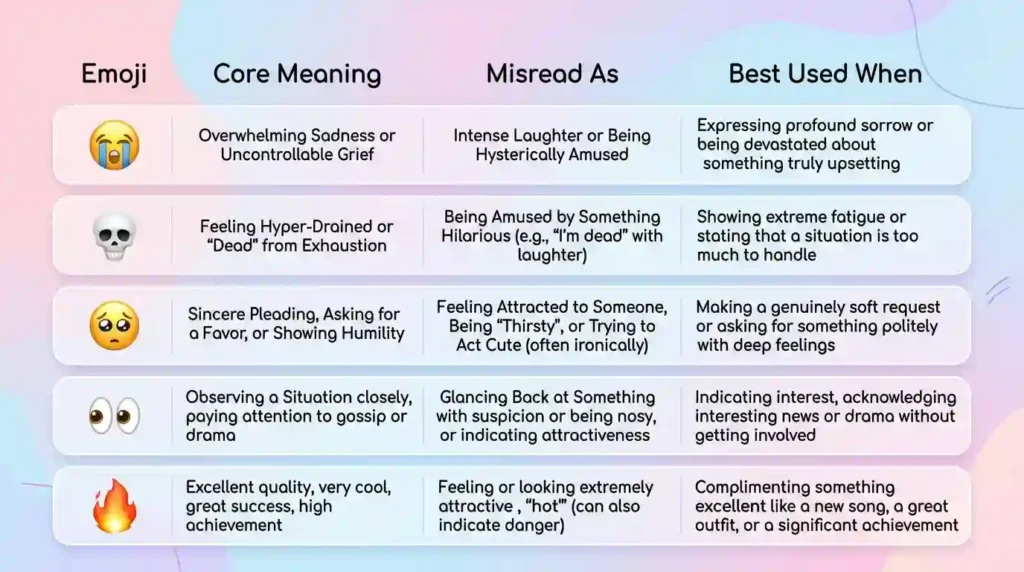
The best example is 😭. On Twitter it often means “this is too funny” or “I’m overwhelmed in a good way.” Real sadness usually comes with plain words around it.
💀 works the same way. Someone who replies with it is usually laughing. Check the original post to catch the tone.
🥺 sits between sweet and dramatic. It can sound soft and sincere, or it can be a playful way of begging.
👀 says “I’m paying attention.” It can mean curiosity, gossip, or a hint, so the post around it matters.
🔥 shows approval or excitement. Between people who know each other, it can also carry a flirty edge.
| Emoji | Core meaning | Misread as | Best used when |
| 😭 | Overwhelmed, often by laughter | Real sadness | Reacting to something funny or touching |
| 💀 | Laughing so hard you’re “dead” | Something dark | Replying to a joke |
| 🥺 | Soft, hopeful, pleading | Being upset | Asking for a favor or being sweet |
| 👀 | Watching with interest | Spying | Following drama or hinting at a secret |
| 🔥 | Impressive, exciting | Danger | Praising a photo, song, or idea |
Emoji cards
😭 Loudly Crying Face
Meaning: Overwhelming emotion, often laughter or “this is too much.”
Example 1: This song is so good 😭
Example 2: He really said that out loud 😭
😂 Face With Tears of Joy
Meaning: Real laughter and amusement.
Example 1: That meme got me 😂
Example 2: You can’t be serious 😂
💀 Skull
Meaning: Something is so funny that you’re “dead.”
Example 1: I can’t believe you sent that 💀
Example 2: The timing was perfect 💀
🥺 Pleading Face
Meaning: Sweetness, longing, or a soft request.
Example 1: Can you come with me 🥺
Example 2: You remembered my birthday 🥺
❤️ Red Heart
Meaning: Love, affection, and genuine care.
Example 1: Thank you for everything ❤️
Example 2: You make my day ❤️
✨ Sparkles
Meaning: Something special, fresh, or magical.
Example 1: New week, new goals ✨
Example 2: You look amazing today ✨
🙏 Folded Hands
Meaning: Thanks, hope, or a polite request.
Example 1: Thanks for the help 🙏
Example 2: Please let this work out 🙏
👀 Eyes
Meaning: Attention, curiosity, or a knowing look.
Example 1: Wait, is that an announcement 👀
Example 2: Okay, I’m listening 👀
🫶 Heart Hands
Meaning: Warm support and friendly love.
Example 1: So proud of you 🫶
Example 2: Thanks for being here 🫶
🔥 Fire
Meaning: Excitement, praise, and high energy.
Example 1: This outfit is incredible 🔥
Example 2: That was a great set 🔥
How to use emoji Twitter the right way
Each app has its own mood. The same emoji can feel different depending on where you send it.
WhatsApp is personal and private, so emojis here carry more feeling. Friends and partners use them to soften a message or show warmth. A short “see you soon 🫶” feels natural. In group chats, a quick 😂 keeps things light without needing extra words.
Instagram leans on captions, comments, and reactions to photos. People drop ✨ or 🔥 under posts to show support. In captions, one or two emojis usually look cleaner than a long string. Comments between close friends can be more playful than comments on a stranger’s post.
TikTok
TikTok comments are fast, funny, and often ironic. 💀 and 😭 turn up under videos that made someone laugh. People also use emojis to join a trend or quietly show they get the joke. Reading a few top comments first helps you match the tone.
Dos
- Use the emoji when it matches the emotional tone.
- Consider your relationship with the person.
- Use combinations that feel natural.
Don’ts
- Do not overload serious messages with emojis.
- Do not assume everyone interprets an emoji the same way.
- Do not use an emoji combination that changes the intended tone.
One more thing before you copy and paste. Emojis follow a shared standard called Unicode, but each platform draws its own version. Twitter created its own design set, so the same emoji can look a little different in your emoji keyboard than it does on someone else’s phone.
Best emoji Twitter combos: copy & paste
Romantic
👉 ❤️🫶: A warm way to say you care
❤️✨: Good for an anniversary note
👉 🫶✨❤️: A soft message after a sweet moment
Cute
👉 🥺✨: Perfect for a gentle thank you
🥺🫶: When a friend does something kind
👉 ✨🫶: A light reply to a happy photo
Flirty
👉 👀🔥: A playful reaction to a good photo
👀❤️: A teasing hint that you’re interested
👉 🔥🥺: Flirty but still sweet
Missing someone
👉 🥺😭: When you miss them more than expected
🥺❤️: A soft “come back soon”
👉 😭🫶: Missing a friend who is far away
Good night
👉 ✨🙏: A calm end to the day
❤️🙏: A caring goodnight to someone close
👉 🙏🫶: A kind, simple sign off
Trending emoji Twitter in 2026
These are general patterns, not numbers. The emojis below keep showing up in timelines and replies.
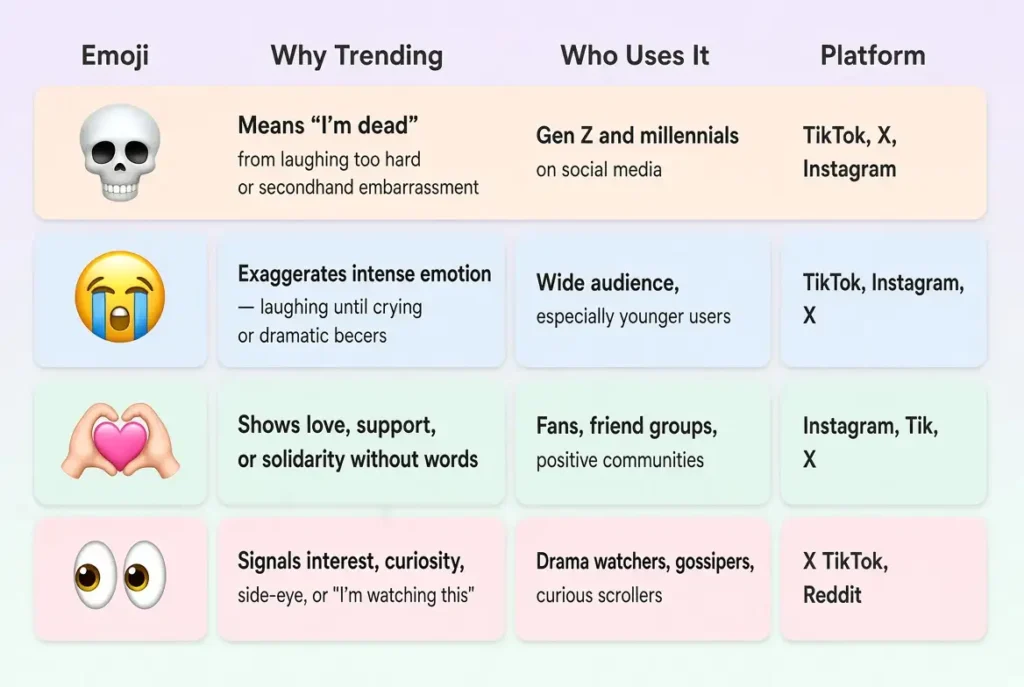
💀 is a favorite reply to jokes and awkward moments. Younger users and meme accounts tend to use it, mostly in replies and quote posts. It fits the short, ironic style of modern texting.
😭 works as a catch all reaction for anything funny, cute, or touching. Fans of music, shows, and sports use it often in replies. It lets people show big feelings in one character.
🫶 has become a friendly way to show support. You see it in replies to creators, friends, and fandom posts. It feels warmer than a plain heart without sounding too intense.
👀 often appears when something interesting is unfolding. Fans, gossip followers, and news watchers use it on timelines and in group chats. It lets people join a conversation without writing a full opinion.
| Emoji | Why trending | Who uses it | Platform |
| 💀 | Quick way to show amusement | Meme fans, younger users | Twitter, TikTok |
| 😭 | Covers many big feelings | Fans, friends | Twitter, Instagram |
| 🫶 | Warm and casual support | Creators, close friends | Instagram, WhatsApp |
| 👀 | Signals interest in the moment | News and gossip followers | Twitter, WhatsApp |
Emoji language keeps changing as people find new ways to say familiar things.
FAQ
What is the most popular emoji on Twitter?
😭 and 😂 are among the ones people see most often in replies and reactions. Popularity shifts over time, so it is best to watch your own timeline.
What does 🥺 mean from a girl or boy?
It depends more on context, relationship, and the conversation than on gender. From a close friend it may be sweet, and from a crush it may be flirty.
Why do emojis look different on iPhone vs Android?
Each platform designs its own artwork. They all follow Unicode standards, so the meaning stays the same even when the picture changes.
Are emoji Twitter used differently in other countries?
Yes, sometimes. Culture, language, and local habits can change how an emoji feels, so context matters.
Conclusion
Emoji Twitter is really about tone, not rules. Read the room, match the mood, and keep it natural. When in doubt, add a few plain words next to your emoji. That is usually all it takes to be understood.

About Matiullah Mughal
Matiullah Mughal is a writer and digital content creator at AuthorityNoria, a platform dedicated to helping people understand emoji meanings, symbols, expressions, and modern digital communication.
With a passion for clear and useful online content, Matiullah Mughal researches the meanings, uses, and cultural context behind emojis and symbols to make digital communication easier to understand. His goal is to turn confusing or unfamiliar emojis into simple, practical explanations that readers can quickly understand and use.
At AuthorityNoria, Matiullah Mughal focuses on creating helpful, easy-to-read guides covering emoji meanings, emoji combinations, symbols, texting expressions, social media communication, and digital language.
Through his work, he aims to help readers choose the right emoji, understand what others mean, and communicate their feelings more clearly in everyday conversations.
When he’s not writing, Matiullah Mughal enjoys exploring new digital trends, online communication, and the constantly changing language of the internet.