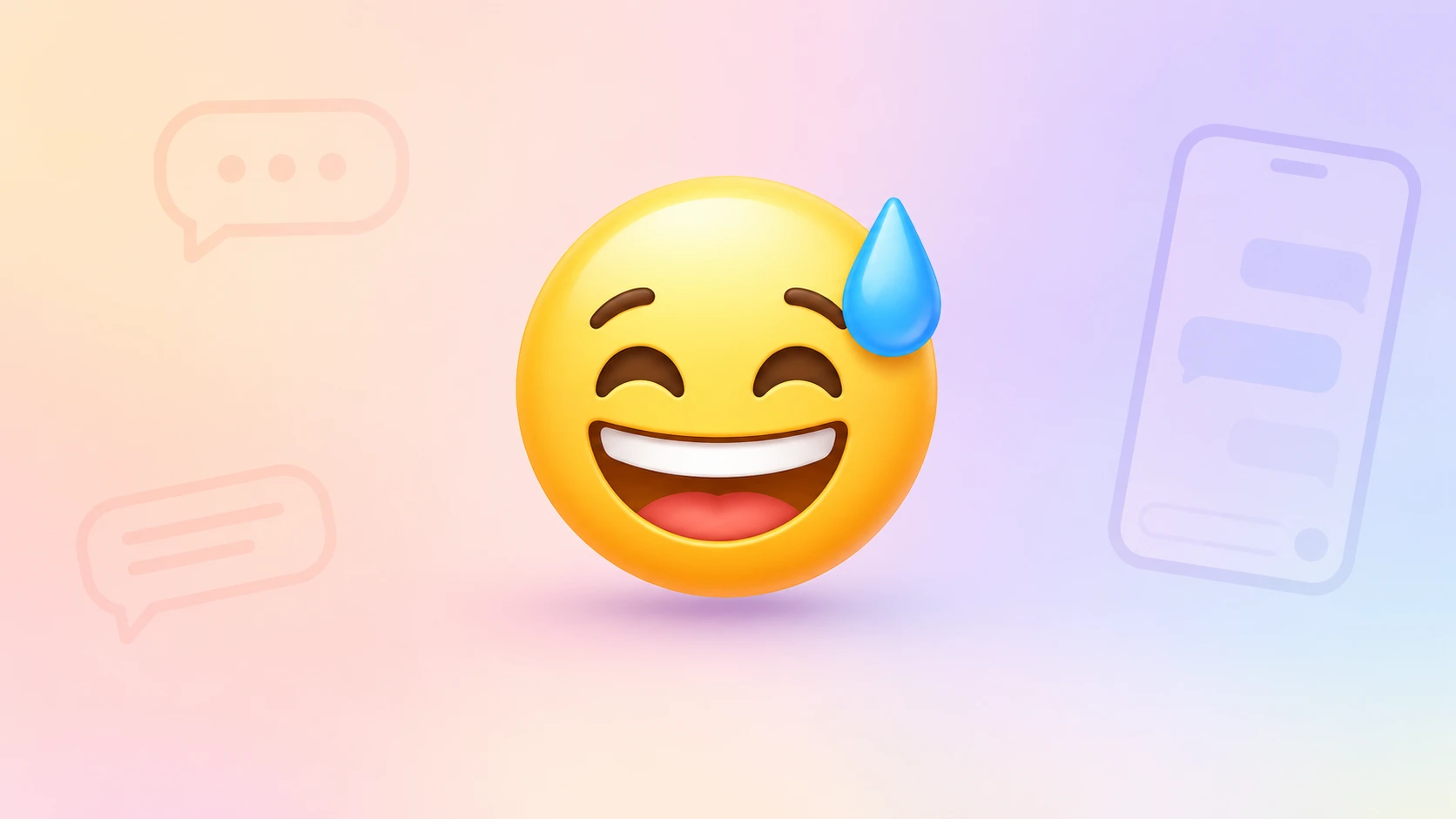
That little 😅 says more than most people realize.
You send a friend a joke about your messy apartment, and they reply with 😅. Is it funny? Is it nervous? Are they judging you? That tiny face with a sweat drop confuses a lot of people, which is why so many search for the laughing sweat emoji. It can mean relief, embarrassment, or awkward humor, depending on who sends it and when. This guide walks through what it means, how people use it, and how to copy and paste it with confidence.
“Sometimes one small emoji says more than an entire sentence.”
What do laughing sweat emojis mean?
The laughing sweat emoji 😅 usually shows nervous laughter, relief, or awkward humor. It says “that was close” or “well, that was embarrassing” without making a big deal of it. People use it to soften an awkward message, admit a small mistake, or laugh at a stressful moment. Context decides the exact tone.
Here is how the main emoji meanings play out in real chats.
The sweat drop is the key detail on 😅. It adds nerves or relief to a smile, so the laugh feels a little forced, in a friendly way. After a close call it means “phew.” After a mistake it means “oops, my bad.”
Compare that with 😂, which is loud, real laughter. Someone who sends 😂 found it funny. Someone who sends 😅 might be laughing and wincing at the same time.
😬 looks similar but leans toward cringe. It says “this is awkward” more than “this is funny.” Pairing it with 😅 makes an awkward moment feel lighter.
😓 is the quieter cousin. It shows tired, stressed, or let down feelings, and there is very little humor in it. Most people read it as a sigh.
🥲 mixes a smile with a tear, so it fits bittersweet moments. 🙈 covers embarrassment, usually with a smile attached.
Remember that your relationship matters. A close friend’s 😅 and a manager’s 😅 may not carry the same tone.
Table
| Emoji | Core meaning | Misread as | Best used when |
| 😅 | Nervous laugh or relief | Sarcasm or annoyance | You dodged a problem or made a small mistake |
| 😂 | Real, loud laughter | Mocking someone | Something is truly funny |
| 😬 | Awkward or cringe | Anger | You want to admit an uncomfortable moment |
| 😓 | Tired or stressed | Sadness | You had a long, draining day |
| 🥲 | Bittersweet happiness | Fake cheerfulness | You are touched but a little sad |
| 🙈 | Shyness or embarrassment | Hiding something | You feel shy about a message or photo |

The 10 core emojis
😅 Grinning Face with Sweat
Meaning: Nervous laughter, relief, or a light “oops.”
Example 1: I forgot your birthday gift 😅
Example 2: Made it to the meeting just in time 😅
😂 Face with Tears of Joy
Meaning: Hearty laughter at something very funny.
Example 1: That video had me crying 😂
Example 2: Your story was hilarious 😂
🤣 Rolling on the Floor Laughing
Meaning: Extreme laughter that is hard to stop.
Example 1: I can’t breathe, stop it 🤣
Example 2: He really said that out loud 🤣
😆 Grinning Squinting Face
Meaning: Excited, happy laughter.
Example 1: We are finally going on the trip 😆
Example 2: That surprise was perfect 😆
😬 Grimacing Face
Meaning: Awkwardness, tension, or “yikes.”
Example 1: I just sent that to the wrong chat 😬
Example 2: Well, that meeting got tense 😬
🙈 See No Evil Monkey
Meaning: Shyness, embarrassment, or “I can’t look.”
Example 1: I can’t believe I said that 🙈
Example 2: Please don’t show that photo 🙈
😓 Downcast Face with Sweat
Meaning: Tired, stressed, or mildly disappointed.
Example 1: Back to back deadlines today 😓
Example 2: The bus left without me 😓
😰 Anxious Face with Sweat
Meaning: Worry or nervous pressure.
Example 1: Results come out in an hour 😰
Example 2: I haven’t started the project yet 😰
🥲 Smiling Face with Tear
Meaning: Happy but emotional, or smiling through sadness.
Example 1: My little cousin is graduating 🥲
Example 2: I’m fine, really 🥲
😭 Loudly Crying Face
Meaning: Overwhelmed feelings, including joke crying.
Example 1: This song gets me every time 😭
Example 2: Too cute, I can’t handle it 😭
How to use laughing sweat emojis the right way
Platforms have different moods, so the same emoji can land differently. Here is how people tend to use them.
WhatsApp emojis lean personal and casual. People use 😅 to soften a late reply, admit a mix up, or tease a friend gently.
It works well in voice note follow ups and group chats. In a one on one chat, it tells the other person you are relaxed about the awkward thing.
Instagram emojis often show up in captions and comments. A 😅 under a photo of a failed bake or a messy workout says “I tried.”
In comments, 🙈 and 🥲 work nicely on throwback posts. Keep captions short so the emoji does the emotional work.
TikTok
TikTok comments are full of humor and irony. People drop 😭 and 😅 under relatable videos to say “this is so me.”
Trends move quickly there, so match the tone of the comment section before you post.
Dos
- Use the emoji when it matches the emotional tone.
- Consider your relationship with the person.
- Use combinations that feel natural.
Don’ts
- Do not overload serious messages with emojis.
- Do not assume everyone interprets an emoji the same way.
- Do not use an emoji combination that changes the intended tone.
A quick note on devices: the same emoji can look different on an iPhone, a Samsung, or a laptop. The shape and shading change, but the idea stays the same. If you want to be sure, check how it looks in your emoji keyboard before you send it.
Best laughing sweat emoji combos: copy and paste
Copy paste emojis save time, and these combos are ready for real chats.
Romantic
👉 ❤️😅 : Admitting you are nervous but head over heels
😘😂 : A sweet sign off after a funny call
👉 ❤️😆 : Happy laughing about your favorite person
Cute
👉 🙈😅 : Feeling shy after a small slip up
😆🙈 : Giggling over a sweet memory
👉 😆😘 : A playful thank you
Flirty
👉 😅😘 : Playing it cool after a bold text
🙈😘 : Blushing after flirting back
👉 😬❤️ : Nervous about asking someone out
Missing someone
👉 😓❤️ : A tiring day, wishing they were here
🥲😅 : Acting fine when you actually miss them
👉 😭😂 : Crying and laughing at old memories together
Good night
👉 ❤️😂 : Goodnight after a funny chat
😓😘 : Worn out but sending love
👉 🥲😘 : A warm goodnight after an emotional talk
Trending laughing sweat emojis in 2026
Trending emojis 2026 conversations show a clear pattern: people prefer emojis that sound a bit self aware. These are general usage patterns, not measured numbers.
😅 keeps showing up because it sounds honest without sounding dramatic. People use it to admit small mistakes in work chats and group messages.
🥲 fits the “I’m fine” mood many people joke about. It appears often in comments on emotional or nostalgic posts.
😭 has become a common way to react to anything cute, funny, or overwhelming. Younger users often use it in comments and captions as joke crying.
🙈 stays popular for shy or flirty moments. It shows up in romantic emojis combos, messages to crushes, and playful replies.
| Emoji | Why trending | Who uses it | Platform |
| 😅 | Admits small mistakes lightly | Friends, coworkers, students | WhatsApp, Instagram |
| 🥲 | Shows mixed, bittersweet feelings | Young adults, nostalgic posters | Instagram, TikTok |
| 😭 | Expresses overwhelming or joke emotions | Teens and young adults | TikTok, Instagram |
| 🙈 | Softens shy or flirty messages | Friends and couples | WhatsApp, Instagram |

Emoji communication keeps changing as people find new ways to say how they feel.
FAQ
What is the most popular laughing sweat emoji?
When people use this phrase, they usually mean 😅. Other options like 😂 and 🥲 get used depending on the mood. Popularity differs by group and platform.
What does 😅 mean from a girl or boy?
Meaning depends more on context, relationship, and the conversation than on gender. A 😅 usually signals nerves, relief, or light embarrassment from anyone. Read the message around it first.
Why do emojis look different on iPhone vs Android?
Each platform designs its own artwork for emojis. They all follow Unicode, the shared standard that gives each emoji its code and name. So the meaning stays the same while the style changes.
Are laughing sweat emojis used differently in other countries?
Yes, interpretation can vary by culture and context. Some groups use 😅 mostly for relief, others for politeness or embarrassment. When texting someone from a different background, keep your message clear.
Conclusion
The laughing sweat emoji works best when it matches the moment and the person you are talking to. Keep your messages short, pick one clear tone, and you will rarely go wrong. Copy a combo, send it, and enjoy the conversation.

About Matiullah Mughal
Matiullah Mughal is a writer and digital content creator at AuthorityNoria, a platform dedicated to helping people understand emoji meanings, symbols, expressions, and modern digital communication.
With a passion for clear and useful online content, Matiullah Mughal researches the meanings, uses, and cultural context behind emojis and symbols to make digital communication easier to understand. His goal is to turn confusing or unfamiliar emojis into simple, practical explanations that readers can quickly understand and use.
At AuthorityNoria, Matiullah Mughal focuses on creating helpful, easy-to-read guides covering emoji meanings, emoji combinations, symbols, texting expressions, social media communication, and digital language.
Through his work, he aims to help readers choose the right emoji, understand what others mean, and communicate their feelings more clearly in everyday conversations.
When he’s not writing, Matiullah Mughal enjoys exploring new digital trends, online communication, and the constantly changing language of the internet.